Definition
The automatic tool changer kit on the ATC CNC router machine makes it easy to change the heads in the tool magazine without manual intervention. This feature can be used for a variety of woodworking tasks such as making doors and cabinets, furniture, musical instruments, signs and decorative items. Multiple router bits are stored in the tool magazine for smooth transitions during use. ATC CNC packages in linear, drum (rotary) and chain topologies are common.
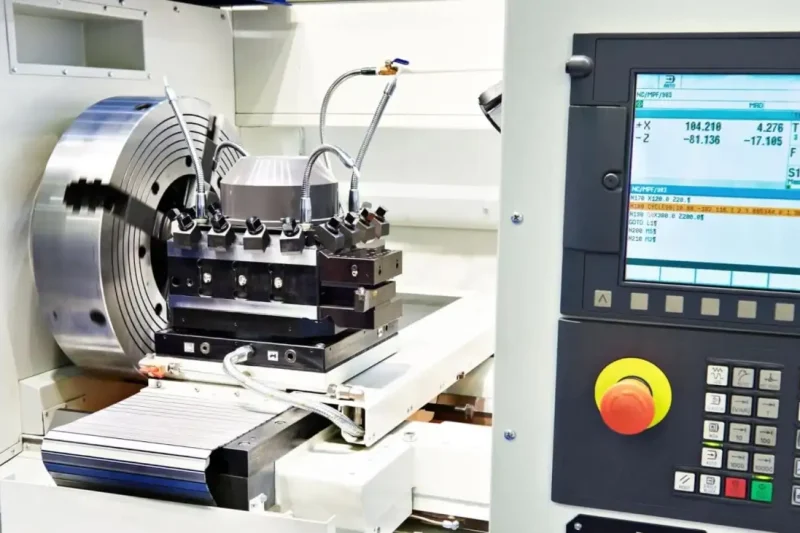
The Automatic Tool Changer, or ATC, is a key component of the ATC CNC Router Machine that allows for seamless tool switching and management between the spindle and the tool magazine. Coordinated by the robot, tool magazine and spindle, the system automatically selects and changes the required tools for each specific process, ensuring uninterrupted machine operation.
Unlike multi-spindle CNC routers, ATC routers utilize a single spindle, which increases the accuracy of the task. The ATC system has two main benefits: it offers a wide range of tooling options to handle complex machining tasks, and it simplifies the spindle structure for increased accuracy.
The ATC system includes a tool magazine, selection mechanism and change system, all of which work together to simplify operations. This setup minimizes the movement of mechanical components and speeds up tool changes, allowing it to support more flexible design layouts and ensuring faster, more efficient machining.
What is Affordable ATC CNC Router ?
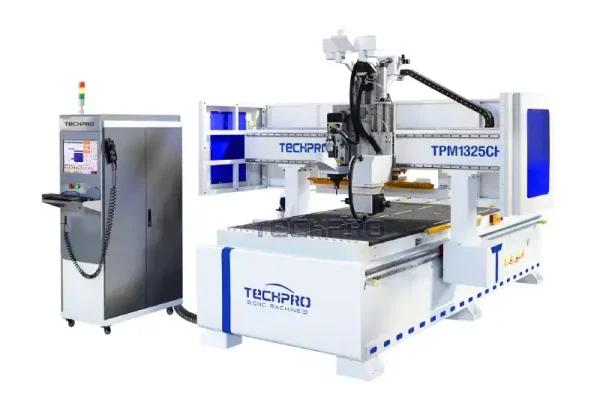
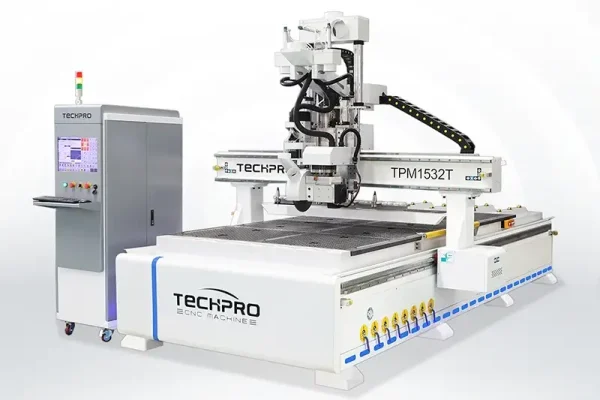
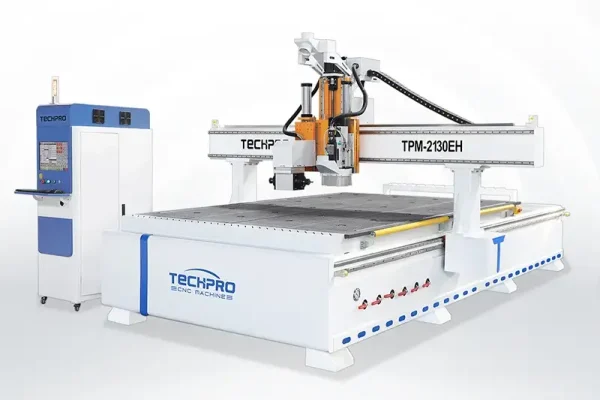
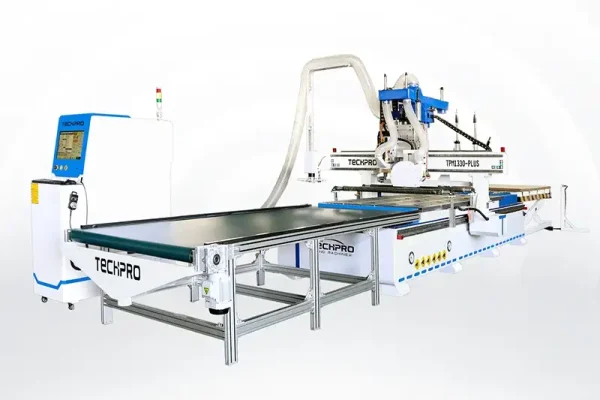
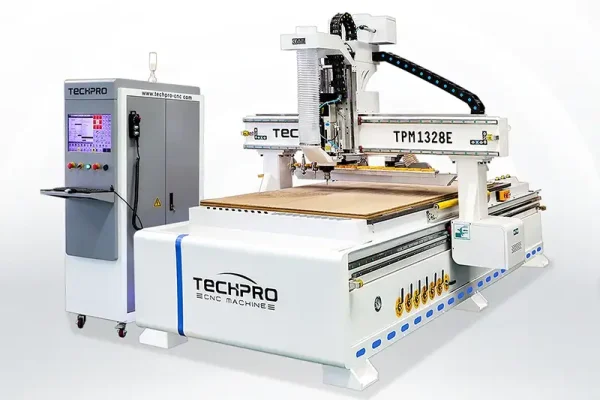
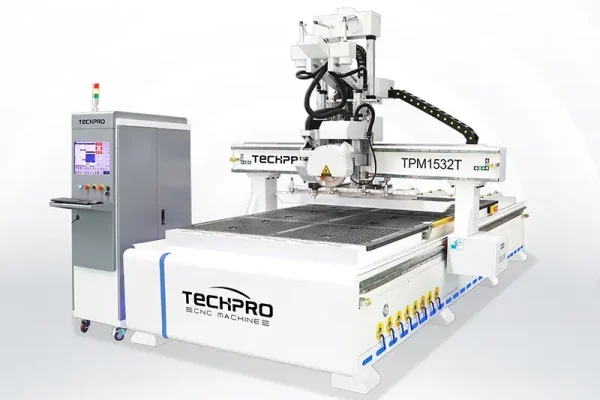
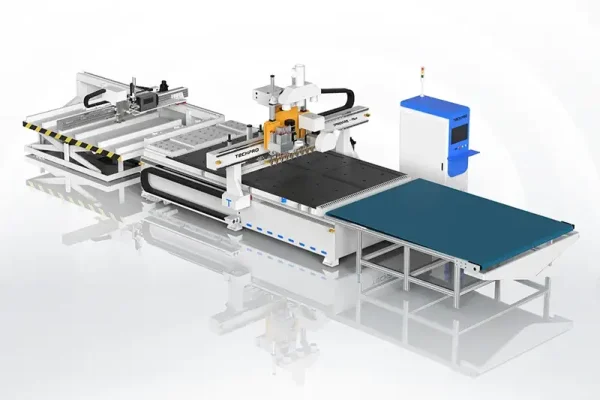
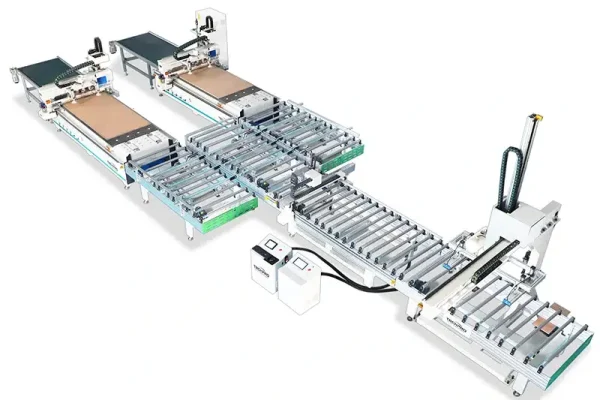
ATC (automatic tools changer ) is an efficient, high precision cnc router machine in China markets, there are have three types: Linear tools changer type, carousel tools changer type and Chain tools changer type. It use G code command control system, with tool magazine, that can complete multiple processes at once(Such as drilling, cutting, engraving, boring, chamfering, punching and other processes). Normally ATC cnc router tool manazine with 8-16 tools, fast speed of tools change, to improve the processing efficiency, control accuracy up to 0.01mm, so it is suitabled for 24 hours production lines of large and medium-sized wooden door, cabinets and furniture decoration industry.
If you want to buy an affordable ATC CNC router, we recommend that you buy a small CNC router machine with a tool changer or a diy CNC tool changer kit. This will allow you to buy the machine that best suits your production line at the lowest budget.
Working Principle
The ATC system has two main benefits: it offers a wide range of tooling options to handle complex machining tasks, and it simplifies the spindle structure for increased accuracy.
In the first method, the tool magazine and spindle move relative to each other to facilitate tool exchange. In this process, the used tool is put back into the magazine and then the new tool is retrieved, a sequential operation that prolongs the tool change time.
In contrast, a device that uses a robot for tool change simplifies this process by simultaneously handling the loading and unloading of tools between the spindle and the tool magazine, greatly reducing tool change time. Compared with the first method, the device changer for robotic tool change is more flexible, quicker and simpler in design. Gripping, stretching, flipping, inserting and returning are some of the loading and unloading operations it can perform easily and efficiently. The robot’s movable jaws have a self-locking mechanism that ensures that the tool is securely fastened in place during the tool change process.
Features & Advantages
ATC CNC router machine features, advantages and disadvantages
Features and Advantages
ATC CNC router machine is equipped with a high-power automatic tool changer spindle with strong starting performance and powerful torque, which can fully utilize the high-speed capability of the machine and thus improve efficiency. A standout feature is the unique tool magazine, which minimizes downtime by making it easy to change router heads in just a few seconds. The machine’s standard configuration includes an eight-cutter magazine; however, the magazine capacity can be adjusted to suit your needs for various projects.
The ATC CNC router’s features and configurations allow it to perform complex machining tasks, making it a flexible and effective solution for projects ranging from intricate upholstery to furniture manufacturing.
Disadvantages
ATC CNC routers have a number of advantages, but they also have some disadvantages, including
- Small businesses and hobbyists may be deterred by the high initial investment.
- Operators may also need specialized training to use the machine, which can increase operating costs.
- If precision parts need to be made, the machine will need to be maintained and repaired on a regular basis.
In conclusion, ATC CNC router machine has great advantages in terms of speed, precision and versatility, but you should comprehensively consider how much you need to spend on an ATC CNC router machine.
Automatic Tools Changer CNC Router table size:
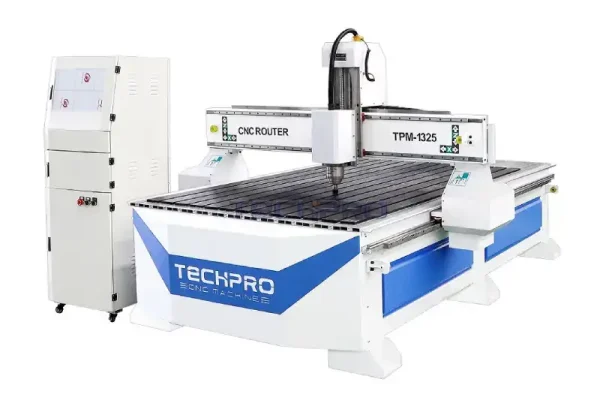
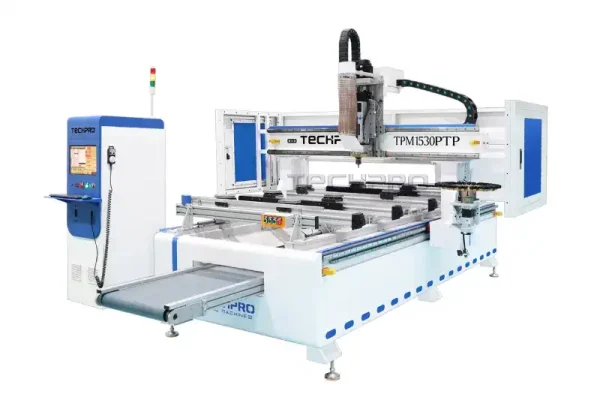
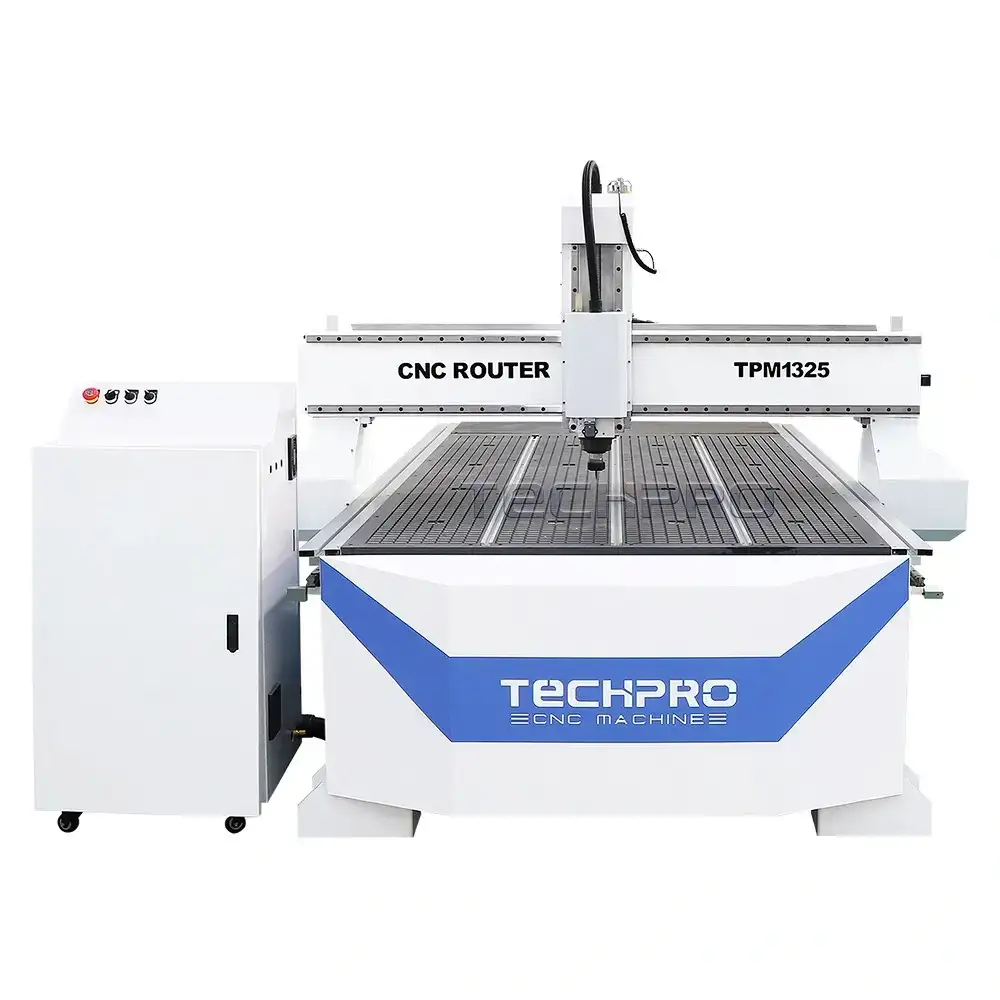
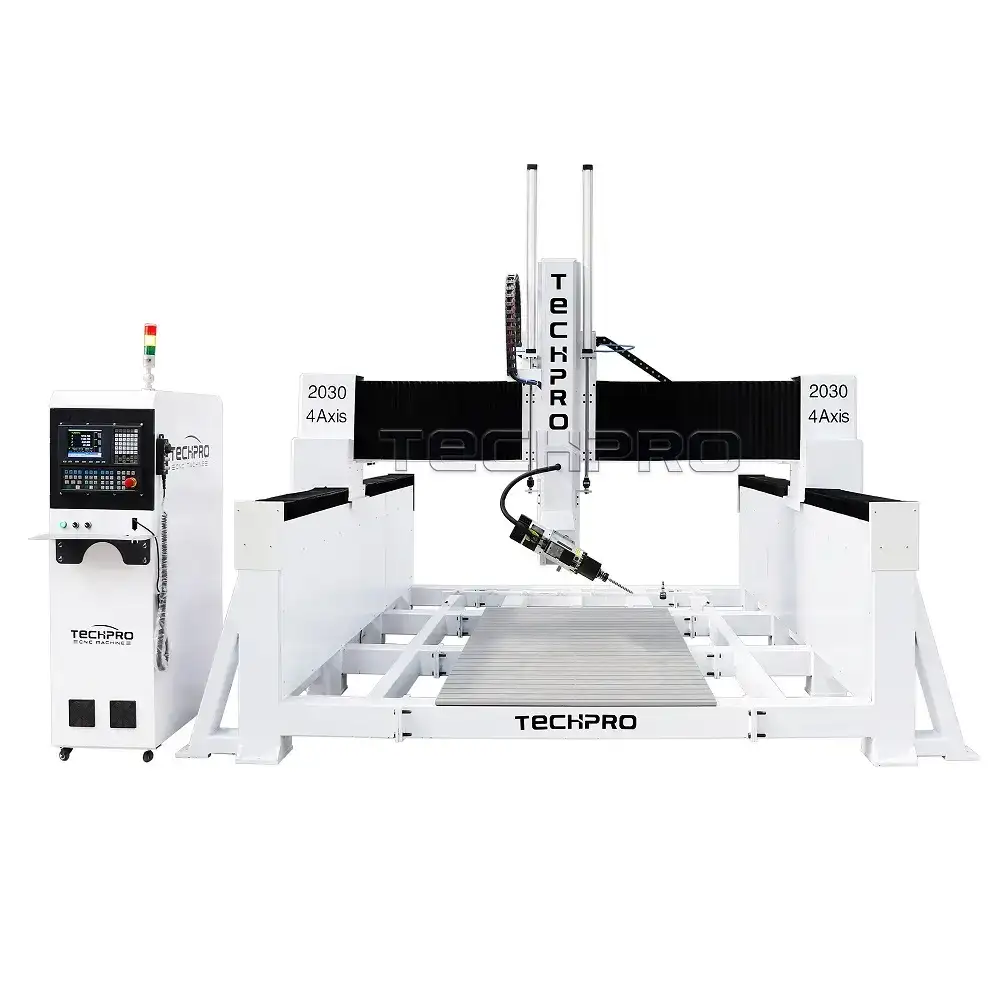
Affordable ATC CNC Router Machines have model: 1212, 1325, 1530, 2030, 2040, 2060. and working table size 1200*1200mm , 1300*2500mm, 1500*3000mm, 2000*4000mm, 2000*2600mm etc, maybe some regions describe cnc router table size with feet:4*4, 4*8, 5*10, 7*10, 7*12 etc. We also accept custom cnc wood router table sizes, to meet customer needs.
Price and Cost
You should be familiar with ATC CNC routers if you have ever worked in manufacturing or woodworking. These multi-purpose tools automate the tool change process, increasing accuracy and efficiency for a variety of tasks.
How much does an ATC CNC router cost?
Entry-level ATC CNC router kits for hobbyists start at about $12,000. These machines are ideal for hobbyists and small projects who want to experiment with CNC machining without breaking the bank.
High-end industrial ATC CNC mills with more sophisticated features, larger work areas and more functionality are at the other end of the spectrum and cost $100,000 or more. The most difficult jobs can be easily accomplished on these machines, which are designed for mass production.
An ATC CNC milling machine with tool changer typically costs about $16,000, which can be a significant investment for a new company or individual hobbyist. To get an accurate quote for a machine that meets your needs, shop around for a reputable manufacturer, as prices can vary significantly depending on the size, brand and specifications of the machine.
You should budget an additional $3,000 to $8,000 if you want to add an automatic tool changer kit to your current CNC machine. A standard CNC machine can be upgraded to become a more effective tool that can handle more complex projects with a higher level of automation.
Technological developments and increasing demand for accuracy and efficiency from the manufacturing sector will drive the ATC CNC router market growth in 2024. Understanding the associated costs is critical for professionals and hobbyists alike to make informed decisions that meet project specifications and financial constraints.
Specifications
Feature | Details |
Brand | TechPro |
Types | Linear Tools Changer, Carousel Tools Changer |
Tool Magazine Capacity | Linear: 8 tools; Carousel: 12-16 tools |
Control System | G code command control system |
Processes | Drilling, Cutting, Engraving, Boring, Chamfering, Punching |
Control Accuracy | Up to 0.01mm |
Suitable Industries | Wooden Door, Cabinets, Furniture Decoration |
Working Area (Carousel) | 1500x3000mm, 2000x3000mm, 2000x4000mm |
Working Area (Linear) | 600x1200mm, 1200x1200mm, 1300x2500mm, 1500x3000mm |
Table Sizes (Models) | 1212, 1325, 1530, 2030, 2040, 2060 |
Table Sizes (Feet) | 4×4, 4×8, 5×10, 7×10, 7×12 |
Customization | Custom table sizes available |
Other Names | Advertising ATC CNC Router, 3/4/5 Axis ATC Wood CNC Routers,
ATC Metal CNC Routers, ATC Mold CNC Routers, etc. |
Price Range | $3,000 − $110,000 |
Cost Factors | Spindle type, Control system, Motor and driver specifications |
Types of Automatic Tool Changer
There are three main types of automatic tool changer kits in CNC routers: linear, drum and chain. Each type has unique advantages and is suitable for different applications. Let us introduce you to each of these machine types.
Linear
Linear ATC CNC routers improve tool change efficiency and speed. Ideal for operations that require quick changeovers, this automatic tool changer is ideal for tool magazines that hold 4 to 12 tools. Its straightforward, in-line design makes it easy to use and maximizes productivity, making it the preferred choice for fast workpieces.
Cylindrical
Also known as the Model CTM or Plate ATC, the Drum ATC router is a rotary tool changer with a swivel configuration for more efficient tool selection. Machines in this configuration are primarily equipped with 8 to 20 tool magazines, and in environments where space is limited and accuracy is critical, roller type CNC routers are especially advantageous for accomplishing complex machining tasks in an organized manner.
Chain
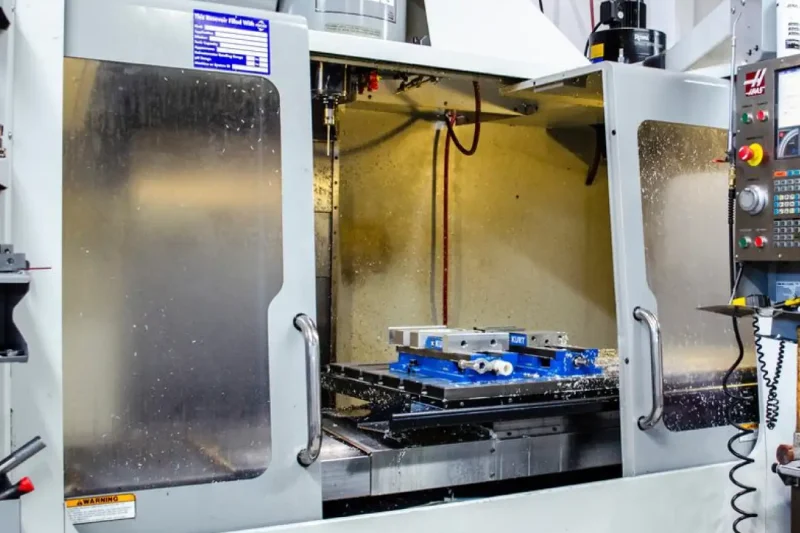
Designed for heavy-duty applications, the Chain Type ATC CNC router supports a 30+ tool magazine. It offers slower tool changes than its counterparts, but has excellent tool-carrying capacity. This type is particularly suited to vertical CNC machines, which must be able to handle a large number of tools without compromising performance in complex and diverse machining operations.
Change Tool
An automated tool change system improves the accuracy and efficiency of your machining operations by facilitating smooth tool changes and ensuring continuous machining.
Principle of Tool Change
By automating the tool change process, the ATC system reduces the need for human intervention and increases machining accuracy. Its three components-a tool changing system, a selection mechanism, and a tool magazine-work together to automate tool changing.
Tool Change Process
Tool Magazine Setup: Initially, the tools are placed into the tool magazine. Each tool is mounted in a standard tool holder and pre-sized outside the machine to ensure accuracy. Depending on the design and requirements of the machine, the tool magazine can be configured in a linear, roller or chain topology.
Tool Selection: When a tool change is required, the CNC controller alerts the ATC system. The system locates the required tool in the tool magazine based on the programmed instruction.
Tool Change Mechanism: The selected tool is removed from the tool magazine and the tool change mechanism is started. After it is released, the current tool on the spindle returns to its designated slot in the tool magazine.
Install the Tool: Insert the new tool firmly into the spindle. The ATC system properly aligns and secures the tool for the next operation.
Continue Machining: After installing the new tool, the CNC router starts up again and performs programming tasks more accurately and efficiently.
Advantages of the ATC System
The downtime associated with manual tool changes is greatly reduced by the ATC system. It reduces human error and ensures machining accuracy and consistency by automating the process. The system is perfect for jobs that require multiple tool changes, such as intricate woodworking, furniture making and upholstery.
In short, the tool change process of the ATC CNC router plays an important role in enhancing the machine’s ability to handle complex and varied machining jobs. Its accuracy and automation make it an essential tool in today’s manufacturing environment.
How To Choose Magazine And Tool?
Choosing the Right Tool Magazine
Choosing the right tool magazine for your CNC machine is critical to optimizing efficiency and accuracy. Tool magazines are used to store router bits and facilitate quick bit exchanges by means of a robot. The choice between a disk or chain tool magazine depends mainly on the technical requirements of the machine tool.
In a disk type tool magazine, the milling head is aligned with the spindle. When changing tools, the spindle housing is raised so that the spindle-clamped cutter head is aligned with the bottom of the magazine. The computer-controlled spindle releases the cutterhead, advancing the magazine, removing the current cutterhead and rotating the next desired cutterhead into place. The magazine then retracts and the new head is inserted into the spindle, which clamps the head and returns it to its working position. While this approach is simple and economical, it can be cumbersome and works best on machines with smaller magazine capacities.
However, because of their small size and much larger capacity, chain magazines are ideal for machining centers that require a lot of tool storage. By lengthening chain magazines to accommodate more tool heads and adapting their configurations to the machine layout, the design and manufacturing process can be simplified.
Tool Selection Methods
Selecting the right tools is critical to smooth operation. Because tool magazines often hold a large number of tool heads, a reliable selection process is required before each change. Both random and sequential methods are commonly used. The sequential method requires the tool heads to be rearranged for different workpieces after they have been arranged in the tool magazine according to the process requirements. This approach is suitable for CNC machines that handle large quantities and a limited range of workpieces because it is relatively straightforward.
With the development of CNC systems, arbitrary tool selection methods utilizing tool holder coding, tool coding and memory techniques are becoming more common.
Tool Coding Techniques
Tool coding involves installing a code bar on the tool or tool holder, usually using the binary coding principle. This method assigns a unique code to each bit, allowing it to be reused in a variety of processes without the need to put it back into the original tool holder. While this method reduces the tool magazine capacity, it complicates the tool magazine and manipulator structure by using specialized coding rings.
In addition, the tool holder coding method assigns a tool position to each tool holder and requires the tool position to be put back into the original tool holder, which is both troublesome and time-consuming.
Currently, advanced tool change systems use the memory method, which has the advantage of storing the number and position of the tool holder in the PLC of the CNC (historical data). Regardless of which tool holder is used, the tool information is retained in the PLC, and precise tool holder position data is provided by the position detection unit. This allows flexibility in retrieving and returning tools, ensuring that the most efficient tool is always selected.
Applications
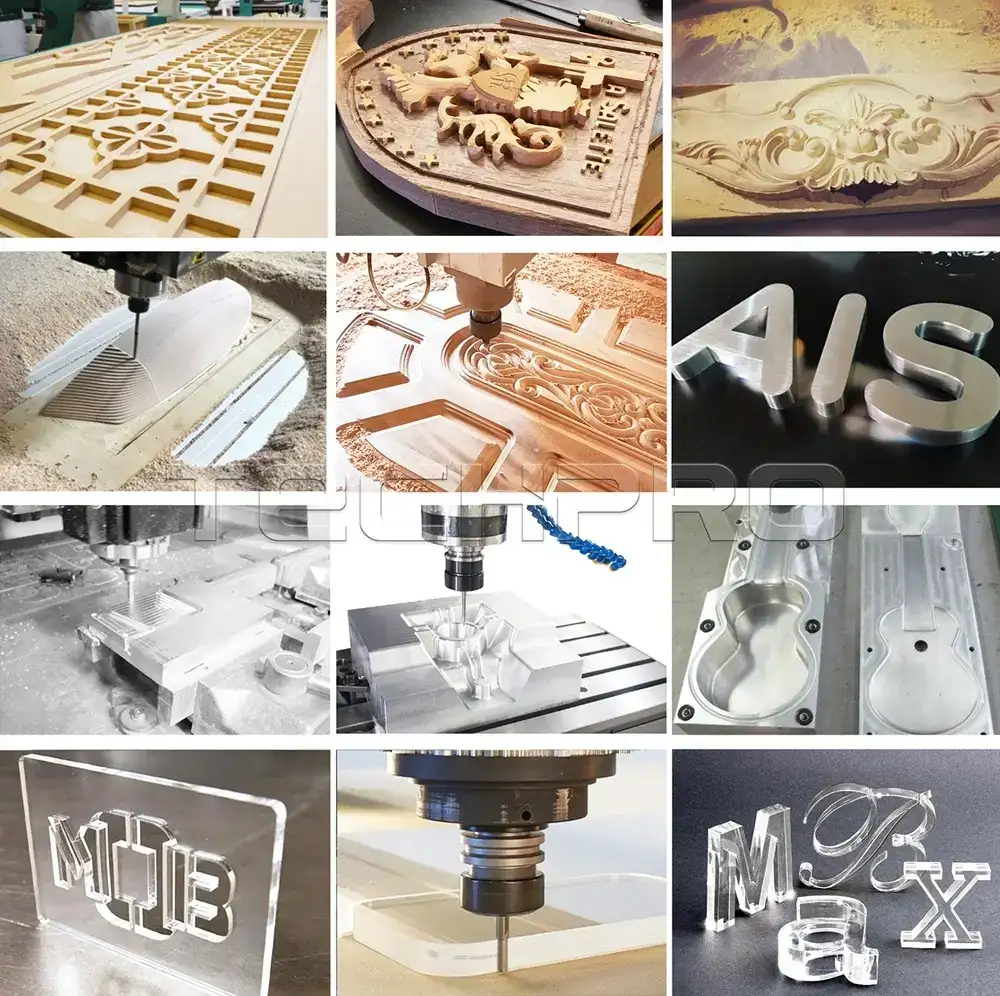
ATC (Automatic Tool Changer) CNC routers are versatile machines that can be used in a variety of industries, including woodworking, advertising and manufacturing. The machine is primarily used to process a variety of materials including wood, plastic, acrylic, stone and composites. Productivity is increased by the machine’s ability to easily switch between different machining tasks with the automatic tool change feature. Examples of ATC CNC router applications in various fields are shown below:
1. Woodworking Industry
Furniture Manufacturing: For cutting, carving and shaping wood to create furniture such as tables, chairs, cabinets and decorative items.
Cabinet Making: Efficiently and accurately produce complex cabinet designs, including intricate door patterns and joinery.
Sign Making: Carve and cut signs from wood, MDF, and other materials to produce fine text and logos.
2. Metalworking
Aluminum Machining: Ideal for cutting and milling aluminum parts for a variety of applications, from automotive to aerospace components.
Sheet Metal Prototyping: Rapid prototyping and low volume production of sheet metal parts.
3. Plastics and Composites
Acrylic Processing: Cutting and engraving of acrylic sheets for signs, displays and decorative items.
Composite Processing: Processing of composite materials used in lightweight construction for industries such as aerospace and automotive.
4. Stone and Marble Processing
Engraving and Cutting: Engraving and cutting of stone and marble for architectural details, monuments and decorative elements.
Tile Fabrication: Creates intricate designs and patterns on floor and wall tiles.
5. Prototyping and Modeling
Product Design: Rapidly create prototypes of product designs in wood, plastic or metal, allowing designers to test and refine their ideas.
Architectural Modeling: Making detailed architectural models for presentation and planning.
6. Advertising and Display
Exhibition Stands: Creating complex shapes and structural components for exhibition stands and displays.
Point of Sale Displays: Modifying displays for retail environments to improve brand and product presentation.
7. Marine Fabrication
Interior Components: Cabinets, trim and other marine interior components are cut and molded from marine materials.
Hull and Deck Components: Used to machine wood and composite materials into hull and deck components.
8. Musical Instruments
Components for Musical Instruments: To make parts for musical instruments such as guitars, violins and pianos, to ensure precision and quality of sound.
9. Education and Training
Technical Training: Employed in educational institutions to instruct students on CNC machining and to offer them practical experience with advanced manufacturing methods.
The ATC CNC routers are a critical tool in industries that require high precision and efficiency, as they are capable of performing intricate tasks with minimal human intervention.
Purchasing Process
We will recommend the most suitable stone CNC engraving machine for your specific requirements. Our team will assess your needs and develop the best solution for you.
After understanding your requirements, we will provide you with a detailed quote for the stone CNC milling machine. This will include the most suitable specifications, high quality accessories and a competitive price.
To avoid misunderstandings, both parties will thoroughly review and go over every detail, including technical parameters, specifications and commercial terms before moving forward.
We will send you a Proforma Invoice (PI) and sign the contract with you after you are satisfied with every detail.
We will start manufacturing your stone CNC milling machine as soon as we receive your signed sales contract and deposit. We will provide you with the latest production information at every stage.
The whole production process will be subject to regular inspection and strict quality control. The whole machine will be tested before leaving the factory to ensure the best performance.
- Transportation and Delivery:
After your confirmation, we will arrange delivery according to the terms specified in the contract.
We will provide all the necessary shipping documents for the smooth customs clearance of your stone CNC milling machine.
We provide professional technical support and free service by phone, email, Skype, WhatsApp, online live chat and remote service. In addition, we also provide door-to-door service in some areas to ensure your satisfaction and peace of mind.
ATC CNC Router Machine Troubleshooting
An ATC CNC router, like any complicated machine, may have problems that require troubleshooting. This guide provides diagnostics and troubleshooting for common problems you may encounter while operating your ATC CNC Router.
1. Tool Change Faults
ATC CNC routers often have problems changing tools. This may be due to spindle or tool magazine misalignment or mechanical failure.
- Check the Tool Magazine Alignment: Verify that the tool magazine and spindle are properly aligned. Misalignment will prevent the tool from being inserted or removed properly.
- Check Pneumatic System: Check that the pneumatic system controlling the tool changer is functioning properly. Check for leaks or blockages in the air lines.
- Sensor Calibration: Verify that each sensor used during the tool change process is free of debris and properly calibrated.
2. Spindle Performance Issues
The router’s spindle is critical to its operation, and any problems can affect the machine’s accuracy and efficiency.
- Check the Spindle Bearings: worn or damaged bearings can cause excessive vibration and noise. If necessary, replace the bearings and perform routine checks.
- Check the Spindle Motor: Make sure the spindle motor is running at the correct speed and power. Excessive heat or unusual noise may indicate motor problems.
- Knife Holder Check: Check that the knife holder is clean and free of wear and make sure that you are holding the knife securely.
3. Variability in Cut Quality
Inconsistent cut quality can be caused by a number of things, including tool wear or incorrect machine settings.
- Inspect Tools: Check tools regularly for wear and replace as necessary to maintain cutting accuracy.
- Machine Alignment: Ensure that the CNC router is positioned correctly. Check axis alignment and recalibrate as necessary to ensure accuracy.
- Material Setup: Ensure that the material is properly positioned and clamped to the table to prevent it from moving during machining.
4. Software and Control Problems
Errors in the software or control system may affect the operation of the ATC CNC Mill.
- Software Updates: Ensure that the latest patches are installed on all software, including CNC controllers and CAD/CAM programs.
- Verify that all CNC control parameter settings are appropriate for the machining task.
- Understand what common error codes mean. Refer to the machine manual for assistance in troubleshooting specific error messages.
5. Electrical and Connection Problems
Electrical problems can cause machine performance problems or unplanned downtime.
- Check Wiring and Connections: Periodically check all electrical connections for wear or damage, and if damaged, replace the connecting equipment immediately. Loose connections can cause power failure problems.
- Check the Power Supply: Make sure the power supply is reliable and meets the needs of the machine. Power fluctuations can affect machine performance.
- Network Connection: To avoid data transmission errors, make sure that the machine connected to the network has a stable and secure connection.
If your machine is not listed in the above list of faulty repairs, please contact the manufacturer for after-sales service to avoid production stoppage due to machine failure.






 English
  Turkish
  French
  German
  Vietnamese
  Italian
  Dutch
Dutch  Afrikaans
  Korean
  Spanish
  Polish
  Indonesian
  Japanese
  Russian
  Hindi
Hindi  Danish
  Finnish
  Thai
Thai  Chinese
  Bulgarian
  Czech
Czech  Hebrew
  Arabic
  Portuguese
  Swedish
  Hungarian
  Croatian
  Slovak
  Norwegian