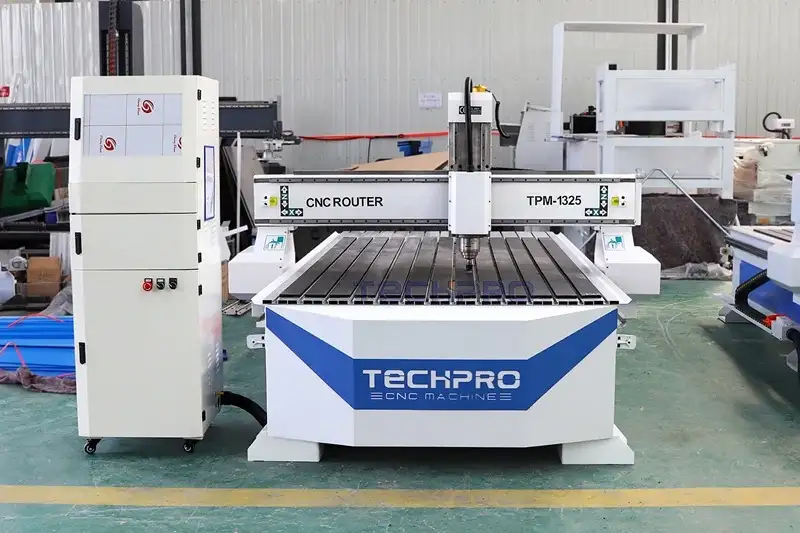
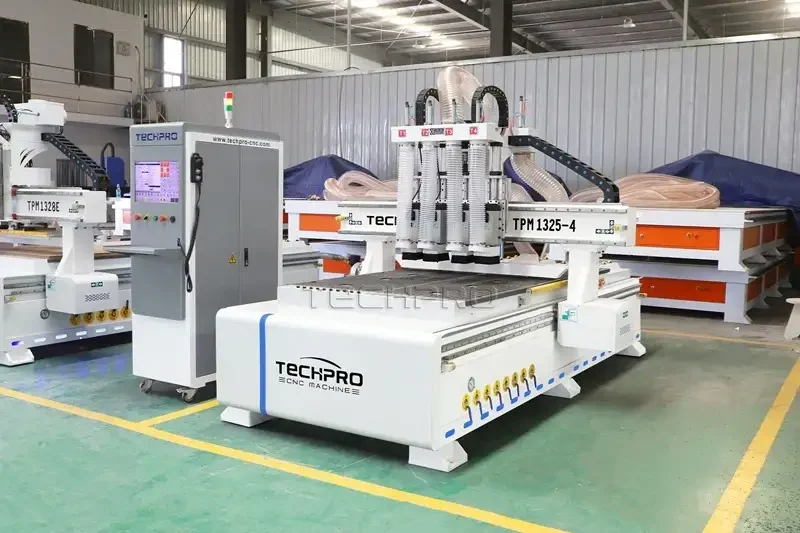
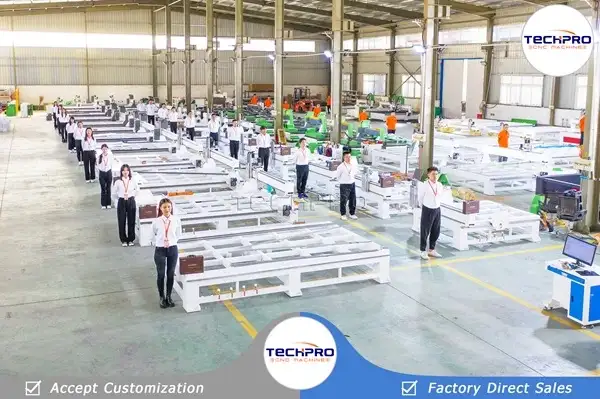
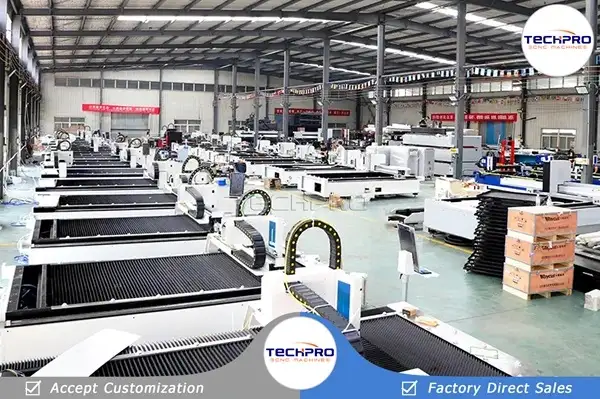
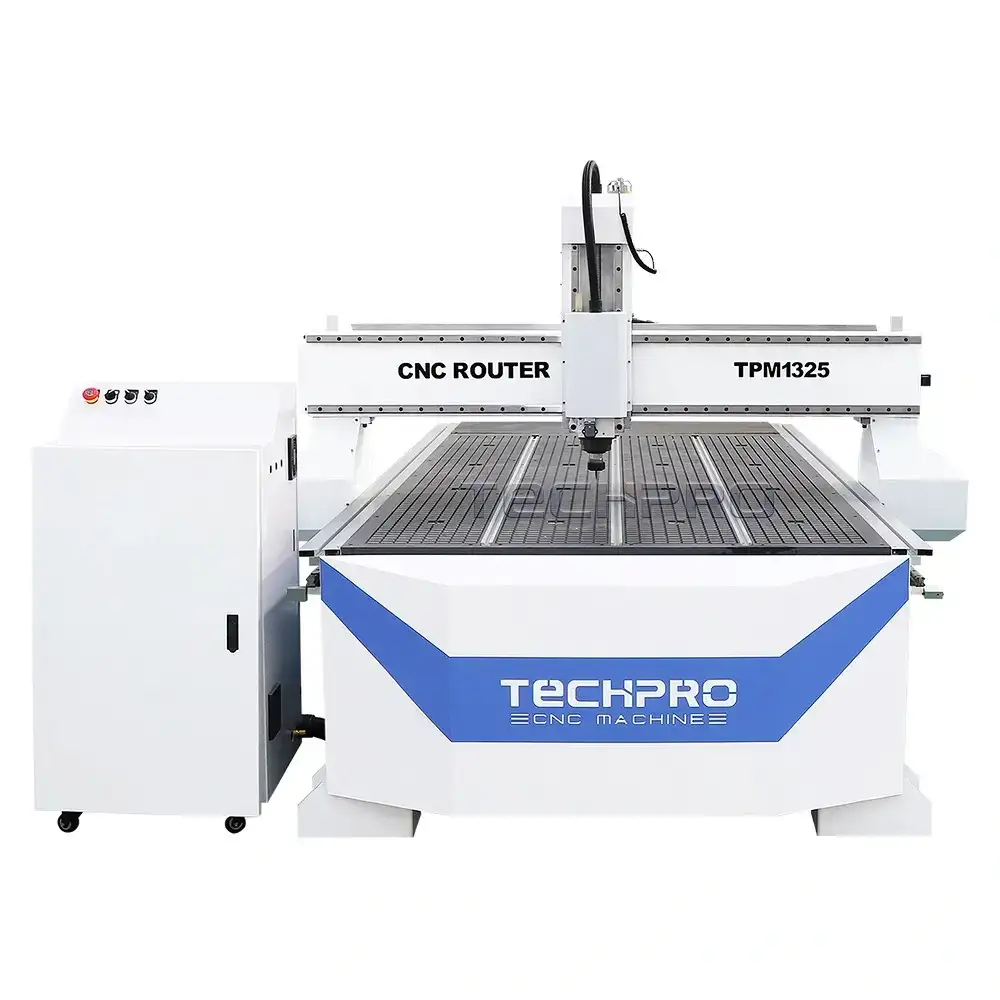
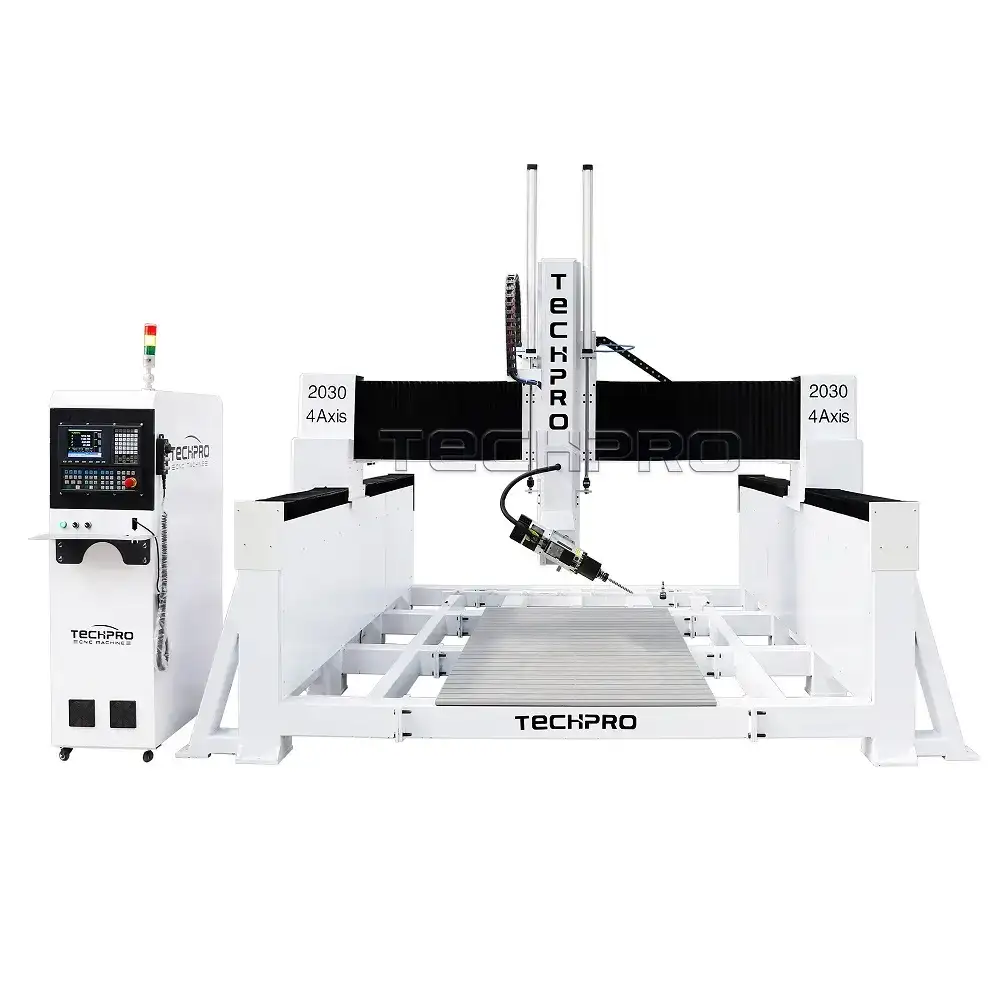
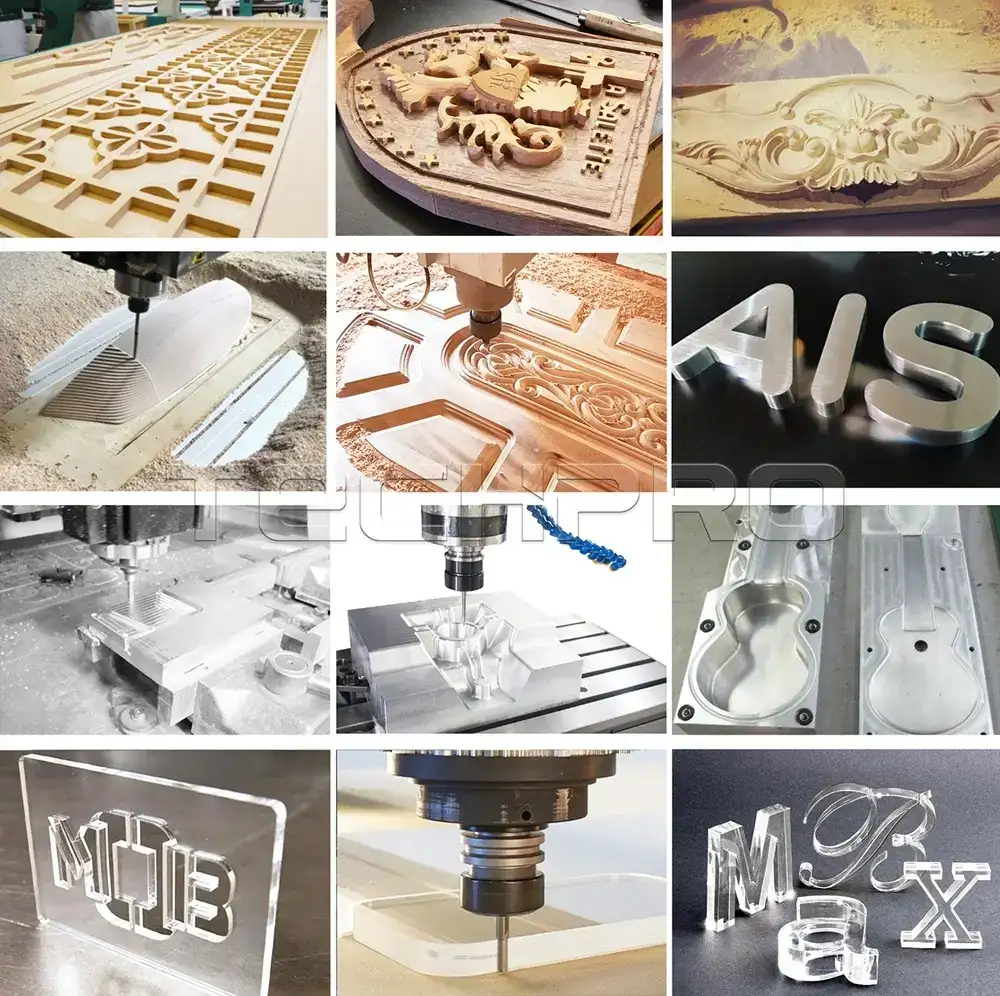
Are you looking to purchase high quality CNC machine parts? Or do you need a manufacturer or store that can provide you with accessories for your CNC machine? TechPro, as a professional CNC machine tool manufacturer, we offer a wide range of accessories for many types of machines, including spindles, stepper motors, pumps, guides, inverters, milling cutters, blades, optics, drills, sensors, racks and gears, belts, air compressors, laser lights, power supplies, blowers, reflectors, and exhaust fans. etc. No matter what your needs are, we can provide you with a satisfactory solution.
Types of CNC Machine Parts
Essential Components
CNC Controller
The central component that controls machine functions such as spindle control and axis movement, and decodes G-code.
Spindle
The spindle is the key component that drives and holds the cutting tool in rotation. It offers a variety of power ratings and cooling methods (both liquid and air) for users to choose from to meet different machining needs.
Linear Guide
Linear guides are an important component of a machine tool used for precise movement along an axis. To ensure their durability and accuracy, linear guides are usually manufactured from hardened steel.
Ball Screws
Are mechanical devices that effectively reduce friction by converting rotary motion into linear motion using ball bearings.
Other Accessories
Toolholders
The toolholder is a device that holds the cutting tool securely in the spindle and includes a collet and quick-change system to improve machining accuracy.
Workpiece Clamping Device
Clamping devices are tools that hold the workpiece in place during machining, such as vises and fixtures, to ensure accuracy and stability during machining.
Cooling System
A system for controlling heat during machining, which extends tool life and improves surface finish. Includes mist and immersion coolant options.
Dust Collection System
Equipment for collecting chips and debris, ensuring a clean working environment and protecting the machine and operator.
Upgrades and Improvements
Upgraded Controller
An advanced controller improves overall machine performance by increasing processing speed, user interface and software compatibility.
Servo and Stepper Motors
- Servo motors: Offer high torque and precise control, ideal for dynamic applications.
- Stepper motors: Cost-effective and simple in construction, suitable for tasks where precision is not critical.
Enhanced Software Solutions
Improved CAM software has significantly increased programming efficiency and optimized machining strategies for seamless integration with CAD systems.
In order to improve the performance and efficiency of machining operations, it is critical to have a thorough understanding of the components and capabilities of each type of CNC machine tool. With regular upgrades and improvements, modern manufacturing will become more productive and adaptable.
Buying Guides for CNC Machine Parts
How to choose the right CNC parts.
There are several important factors to consider when selecting CNC parts:
Material
- Aluminum: light weight and corrosion resistant, suitable for precision machining.
- Steel: high strength and durable, suitable for heavy-duty applications.
- Plastic: suitable for non-load-bearing parts with a good cost-performance ratio.
- Titanium: Titanium is used extensively in the aerospace industry because of its great strength, light weight, and resistance to corrosion.
Size
Make sure the part will fit within the machine’s work envelope.
To ensure machining accuracy, ensure tolerances meet required standards.
Compatibility
Confirm that the part is manufactured for a specific make and model of CNC machine tool.
Ensure that the technical specifications meet the requirements of the machine tool.
Brand Recommendations
- TechPro: Expert Chinese CNC machine manufacturer.
- Haas Automation: Provides high quality CNC machine parts and tools.
- Fanuc: Offers a wide selection of CNC automation parts.
- Mitsubishi Electric: High-tech parts made with precision.
- Siemens: Reliable CNC controllers known for innovation.
CNC Accessories Budget.
When creating a budget, consider the following cost factors:
- Initial investment: Calculate the upfront cost of parts and accessories required.
- Ongoing maintenance: Include the cost of regular maintenance and replacement parts.
- Quality versus cost: High-quality parts can reduce downtime and therefore long-term costs.
Balance Quality and Price
- Research studies: Compare user reviews and performance of different brands.
- Used parts: Refurbished parts can be considered to save costs while ensuring quality.
- Volume purchasing: Group purchasing can often reduce the cost of individual parts.
- Warranty and support: Choose parts that offer a comprehensive warranty and customer support services to ensure long-term reliability.
Usage Guides for CNC Machine Parts
Installation Tips
Step-by-step installation guide for key components
CNC Machine Frame Assembly
- Gathering components: Make sure that all parts of the machine (base, vertical supports, beams) are ready to go.
- Leveling the base: Place the base on a flat surface and check that the machine base is level.
- Attach the supports: fix the vertical supports to the base using the bolts and make sure that the connection is secure.
- Attach beams: Attach the beams to the frame to enhance stability.
- Check alignment: Double check the alignment of all connected parts.
Spindle Installation
- Turn off power: First disconnect power to the machine.
- Align spindle: Align the spindle with the mounting bracket.
- Secure the spindle: Secure the spindle using the bolts provided to ensure it is stable.
- Connect cables: Connect the power and control cables according to the wiring diagram.
- Test function: Turn on the machine power and perform a low speed run to check for abnormal vibration.
Controller Setup
- Mounting the controller: Place the controller in a location that is easy to operate.
- Connect components: Connect the controller to the power supply and various components of the machine.
- Install software: Load and configure the machine control software on your computer.
- Run test program: Ensures effective communication between the controller and the machine tool.
Tool Holder and Tool Mounting
- Select tool holder: Selects the proper tool holder for the machine.
- Inserting the tool: Use the locking device to secure the tool in the tool holder.
- Mounting the tool holder: mount the tool holder to the spindle and make sure it has been properly aligned.
- Calibrate tool length: Enter the actual length of the tool in the machine software.
Common Errors
- Incorrect leveling: The machine is not level and errors will occur during machining.
- Over-tightening: Over-tightening bolts can damage machine components.
- Incorrect wiring: Double-check all connections to prevent malfunctions while the machine is running.
- Skipping calibration: Skipping the step of calibrating the machine before machining results in inadequate machining accuracy.
Maintenance and Care
Routine Maintenance
- Clean the machine: Remove dust and debris from surfaces and components on a regular basis.
- Check fluid levels: Ensure that coolant and lubricants are adequate.
- Check for wear: Periodically check tools and components for signs of wear.
Weekly Maintenance
- Lubricate moving parts: Apply the proper amount of lubricant to guides, screws and bearings.
- Tighten fasteners: Check and secure all screws and bolts.
- Check electrical connections: Make sure all connections are secure and free of corrosion.
Monthly Maintenance
- Calibrate machine: Perform a full calibration to ensure machining accuracy.
- Check alignment: Use a dial indicator to check the alignment of the spindle and axes.
- Clean filters: Maintain the air and coolant filters as needed.
Quarterly Maintenance
- Check drive belts/chains: Check for wear and replace if necessary.
- Check for software updates: Ensure that the machine software is up to date.
- Overall inspection: Check machine components for wear or damage.
Annual Maintenance
- Specialized maintenance: Arrange for a technician to perform a thorough inspection.
- Replacement of major components: Evaluate the service life of components and replace them if necessary.
- Update safety features: Ensure that all safety mechanisms are working properly and comply with the relevant requirements.