Are you looking for a high quality 4 axis CNC router kit manufacturer or store? Or do you want to build your own 4-axis CNC router table in a DIY way? No matter what your needs are, TechPro offers new and used 4th axis CNC milling machines at competitive prices with professional customer service. We offer several models of machines from mini to desktop to large industrial machines, with workbenches in 2 * 4, 4 * 4, 4 * 8, 5 * 10, 7 * 10, 7 * 12 and more, and we accept customization in any size. Whether you are a hobbyist, educator, or fabricator, we will provide you with the best machine within your budget to increase your productivity.
Definition
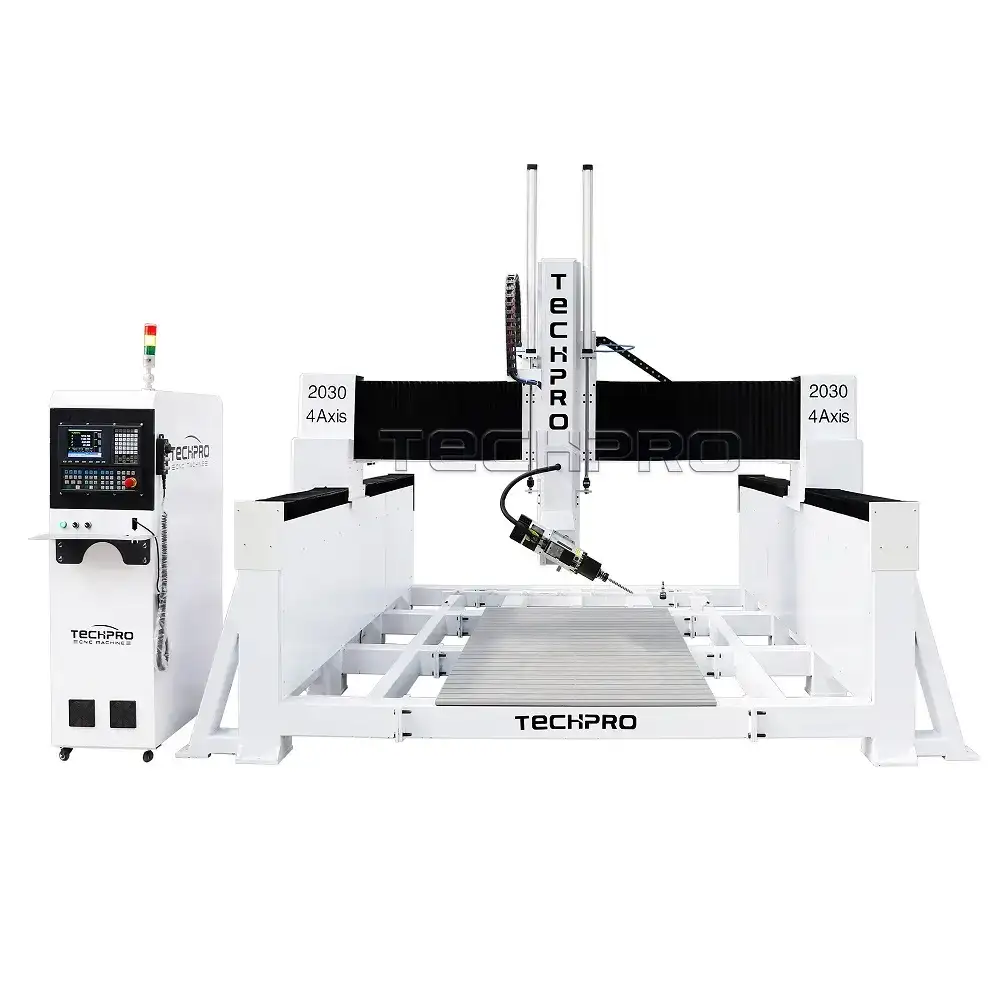
A 4-axis CNC router, also known as the rotary CNC machine, is a multi-purpose machining lathe that incorporates an additional axis of motion for enhanced ability to handle three-dimensional tasks compared to a traditional CNC router. It typically consists of two main types: the spindle swing type (which allows the spindle to rotate 180 degrees) and the rotary axis type (which adds a swivel to the standard three-axis setup). It use G / M code command control system,with tool magazine or manual tools,that can complete multiple processes (Such as drilling,cutting,engraving, boring, chamfering, punching and other surface processes). Because this type machine can process some complicated 3D processes, Compared with 5 axis cnc router machine, the price of the 4 axis cnc machine is relatively low, cost-effective, easy to operate, so it is very popular in the mold,wood three-dimensional processing industry.
Types of 4-axis CNC Routers
There are two main types of 4-axis CNC routers:
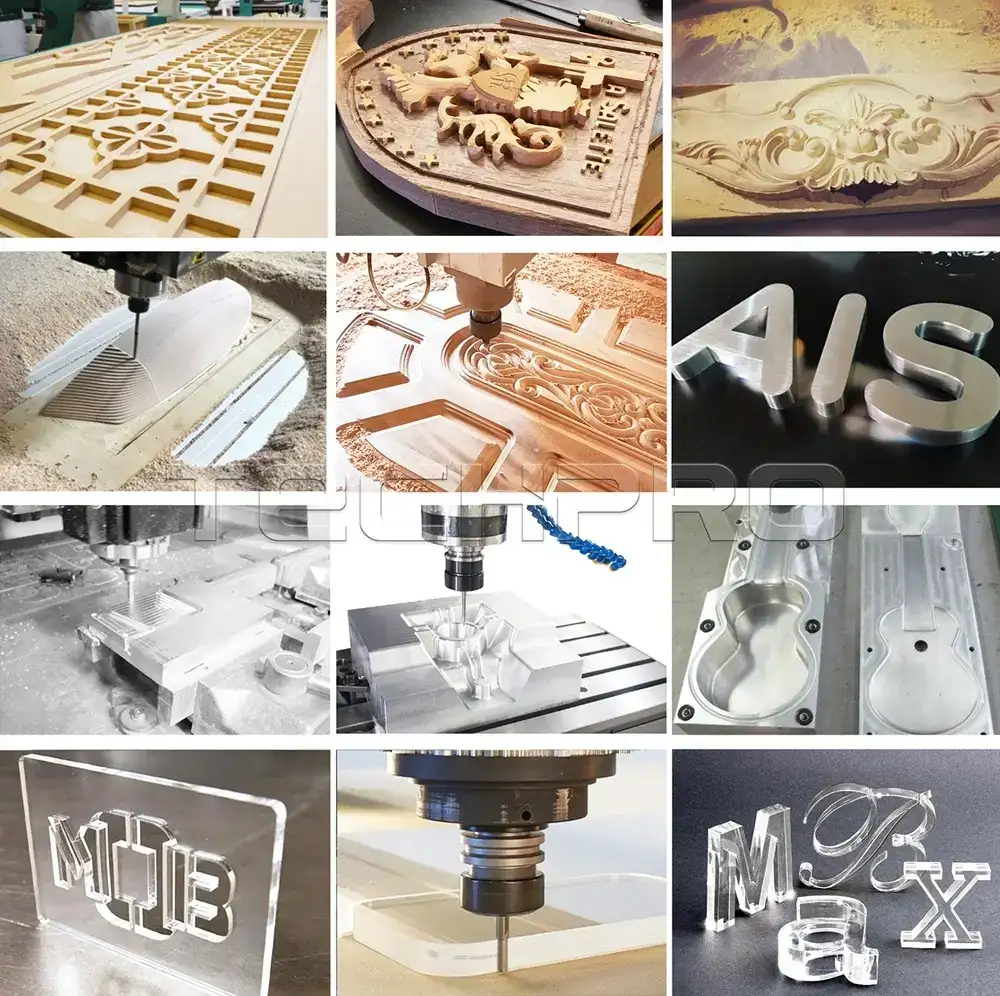
Spindle Swing 180 degress type: This 4 axis cnc router spindle with 12-16 carousel automatic tools changer manazine, can swing left and right ±90 degree, with Z axis feed height 300mm, 400mm, 500mm, 800mm, 1000mm, 1200mm and up to 1500mm. The main function: Surface embossiong , Engraving, Cutting, Lettering, Hollowing, Round carving, Vertical carving and all kinds of shapes. So it is suitable for foam molds, automotive wood molds, large sculptures, aerospace moldes, lost foam molds and wood crafts industrial.
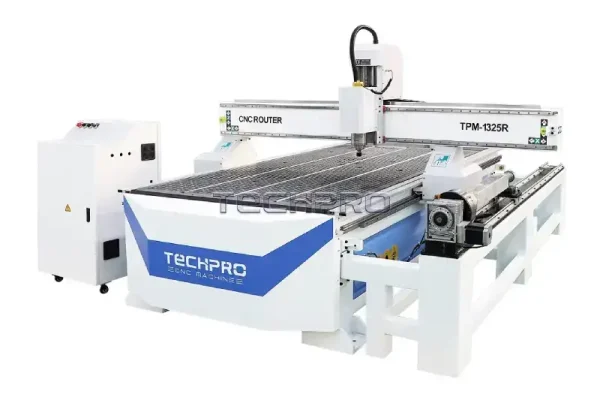
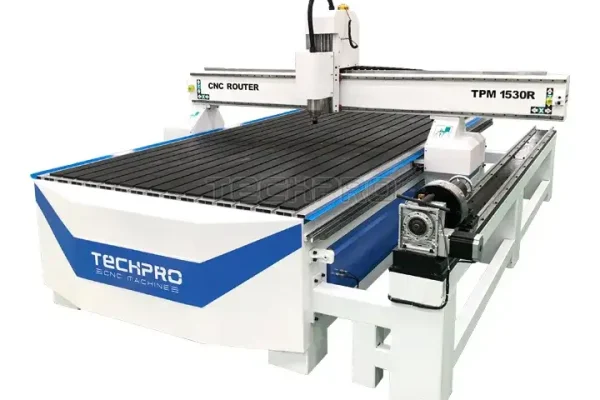
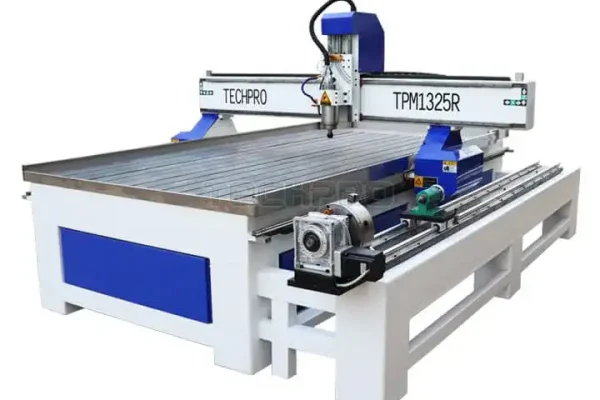
Rotary type: This kinds rotary cnc router machine ① side rotary type (Fixed); ② top rotary type (when not use, can remove from machine table); ③ Multi rotation axis type (multiple rotary together, processing the same material at the same time); This type normally Z axis feed height 200mm, 300mm, 400mm. Because it’s function like a CNC lathe, so this type main processing cylinder, stair railing, stool legs, furniture legs and others 3 axis cnc router working material.
Affordable 4 Axis CNC Router Machine Table Size for Sale:
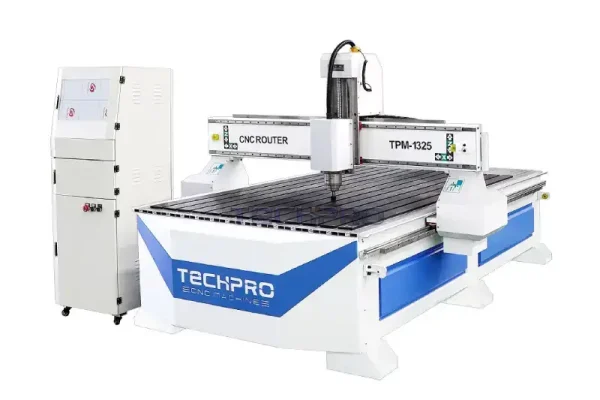
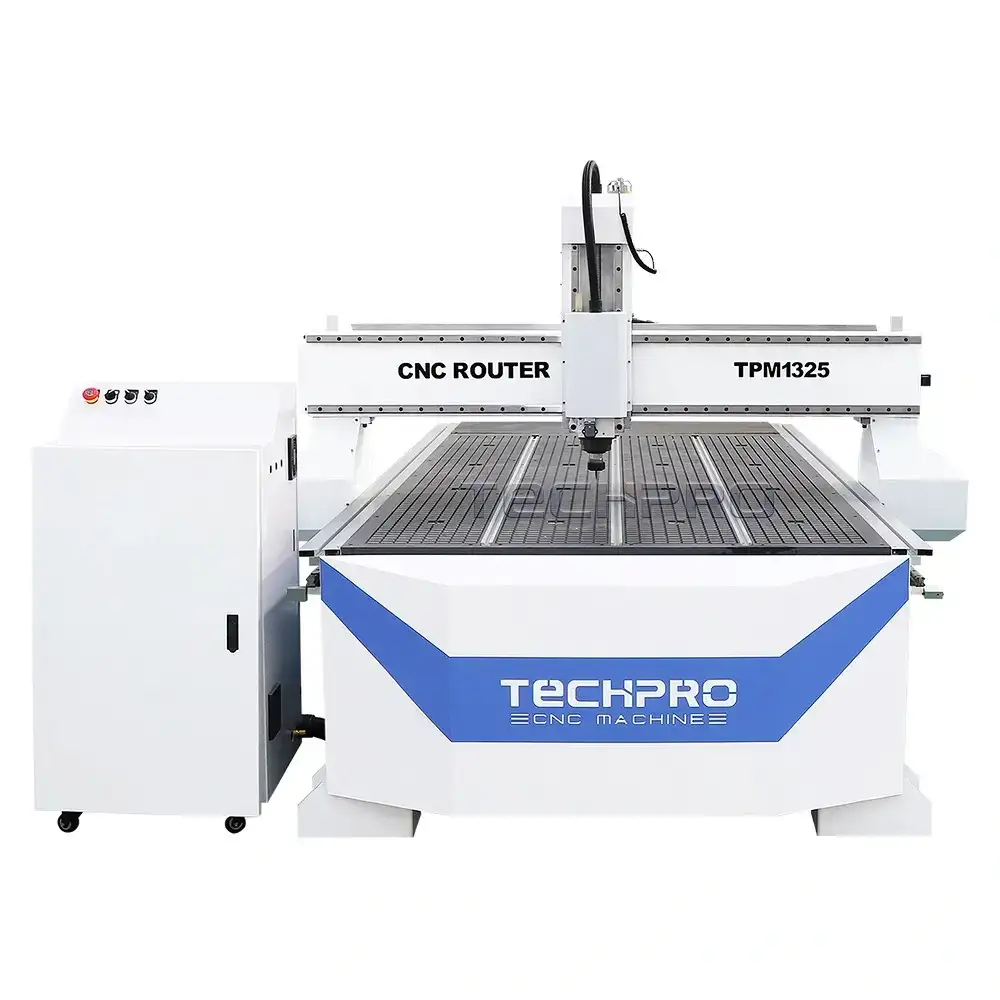
Affordable 4 axis wood CNC router machine have model: 6090, 1212, 1325, 1530, 2030, 2040, and working table size 600*900mm, 1200*1200mm , 1300*2500mm, 1500*3000mm, 2000*3000mm, 2000*4000mm etc, maybe some regions describe 4 axis wood cnc router table size with feet:4*4, 4*8, 5*10, 7*10, 7*12 etc. We also accept custom cnc wood rotary cnc router table sizes, so can meet customer needs.
Applications
A 4-axis CNC router is a standard 3-axis machine with an extra axis, often referred to as the A-axis, which rotates the workpiece, so it is mainly used to create intricate 3-D sculptures and works of art. Here are some of the main applications of a 4-axis CNC router:
Complex Woodworking
Furniture Manufacturing: 4-axis CNC routers are used to create intricate designs and carvings on furniture such as chairs, tables and cabinets. They can produce fine patterns and shapes that are difficult to achieve by hand.
Sculptuers and Artworks: Artists and craftsmen use this router to carve fine sculptures and artwork in wood, which can be cut more intricately using the machine’s ability to rotate the workpiece.
Modeling
Architectural Models: The precision and flexibility of a 4-axis CNC router machine makes it ideal for creating detailed architectural models. It can produce complex geometries and scale models.
Sign Making and Engraving
3D Signage(CNC Sign Making): The wood sign making machine can create three-dimensional signs with raised and intricate patterns.
Engraving: Carving routers are used to create customized, high-quality signs by engraving detailed graphics and text on a variety of materials, including wood, plastic and soft metals.
Manufacturing and Industrial Components
Complex Component Manufacturing: In industries such as aerospace, automotive, and electronics, 4-axis CNC routers are used to machine precision components, which include parts that require multi-sided or multi-angle machining.
Mold Manufacturing: These routers are used to create complex molds and dies to ensure the accuracy of the molds and dies, which are the only way to produce qualified products in the manufacture of plastic and metal parts through processes such as injection molding and die casting.
Features
Flexibility
Rotary Axis: The 4-axis CNC router’s additional A-axis allows for complex three-dimensional machining to create intricate geometries not possible with traditional 3-axis routers.
Spindle and Rotation Options: The machine’s spindle can oscillate and rotate for projects ranging from fine surface embossing to cylindrical workpieces.
Precision and Efficiency Automatic Tool Changer: The router is equipped with a carousel-type automatic tool changer that allows for quick tool changes to minimize downtime and increase productivity. Variable Feed Height: The Z-axis feed height varies from 200 mm to 1500 mm to accommodate different thicknesses of material in your project.
Wide Range of Applications
Material Compatibility: Wood, foam and soft metals can be processed for use in industries such as furniture making, sculpture and mold making.
Customizable Table Sizes: The machine is available in a wide range of sizes, and we also offer a customized size service so that it fits perfectly into your workspace and can be adapted to meet the needs of specific industries.
User-friendly Operation
G/M Code System: A standard G/M code command system ensures precise control for operators of all skill levels.
Cost-effective Solution: More affordable than a 5-axis machine, it offers a cost-effective alternative for organizations seeking to improve productivity on a shoestring budget.
Industrial and Innovative Applications
Precision Manufacturing: It is used for component machining in industries such as aerospace and automotive, where it can be used to produce high-precision, multi-faceted parts.
Artistic and Fine Finishing: Ideal for artists and craftsmen, it makes it easy to produce intricate sculptures and fine engravings.
Specifications
| Brand | TechPro |
|---|
| Model | 6090, 1212, 1325, 1530, 2030 |
| Capability | 2D Machining, 2.5D Machining, 3D Machining |
| Materials | Wood, Aluminium, Copper, Stone, Foam, Plastic |
| Software | ArtCAM, Type3, Cabinet Vision, UG, MeshCAM, AlphaCAM, MasterCAM, Fusion360, AutoCAD, Rhinoceros 3D |
| Controller | Mach3, Mach4, OSAI, Syntec, LNC |
| Price Range | $2,580.00−$38,000.00 |
| OEM Service | Customizable X, Y, Z Axis Working Area |
Model Specifications
| Model | Working Area | Z-Axis Travel | Spindle Power | Max Speed | Tool Change | Rotary Axis Type | Applications |
|---|
| 6090 | 600 mm x 900 mm | 200 mm | 2.2 kW | 25,000 RPM | Automatic (8-tool carousel) | N/A | Small-scale woodworking, sign making |
| 1212 | 1200 mm x 1200 mm | 300 mm | 3.0 kW | 18,000 RPM | Manual | Side rotary axis | Furniture manufacturing, intricate carvings |
| 1325 | 1300 mm x 2500 mm | 400 mm | 4.5 kW | 24,000 RPM | Automatic (12-tool carousel) | Top rotary axis | Large sculptures, architectural models |
| 1530 | 1500 mm x 3000 mm | 500 mm | 6.0 kW | 15,000 RPM | Automatic (16-tool carousel) | Multi rotation axis type | Industrial applications, mold manufacturing |
Costs
4 Axis CNC Router Machine Costs
- TPM6090
- Approximate Cost: $2,580-$3,500
- Entry-level model (portable 4 axis cnc router) for small projects, ideal for hobbyists and small businesses. This entry-level model is suitable for small projects, ideal for hobbyists and small businesses. It has a working area of 600 mm x 900 mm and is equipped with a 2.2 kW spindle.
- TPM1212
- Approximate cost: $4,500 – $6,500 USD
- This mid-range model has a working area of 1200 mm x 1200 mm and a 3.0 kW spindle. It is ideal for furniture making and complex engraving.
- TPM1325
- Approximate cost: $8,000-12,000 USD
- This is an advanced model with a working area of 1300 mm x 2500 mm. Equipped with a 4.5 kW spindle and automatic tool changer, it is ideal for large sculptures and architectural models.
- TPM1530
- Approximate cost: $15,000 – $25,000 USD
- This is a high-end industrial model: This high-end industrial model has a working area of 1500 mm x 3000 mm. It is equipped with a powerful 6.0 kW spindle and advanced automation features for complex mold making.
Additional Costs
- Software licenses: From 500 to 5000 depending on the software selected (e.g. MasterCAM, Fusion360).
- Tools and Accessories: Cutting tools, fixtures and other accessories are critical to your budget and typically cost between 200 and 2,000.
- Transportation and Installation: Transportation and installation costs vary by location and machine size and typically range from 300 to 1,500.
- Maintenance and support: To ensure optimal performance of your machine, our team will provide you with ongoing maintenance and support (after-sales service is free of charge).
The cost of a 4-axis CNC router kit will vary depending on the model, features and additional services required. Entry-level models start at around $2,580, while high-end industrial machines can start at over $25,000. When purchasing a CNC router, it is important to consider factors such as software licenses, tooling, and shipping in order to plan your budget wisely.
Pros & Cons
Pros
Advanced Machining Capabilities: The additional rotary axis (A-axis) allows for detailed 3D marking not possible with a standard 3-axis router.
Material Adaptability: A wide range of materials, including wood, plastic, metal and foam, can be finished for a variety of jobs.
Functional Efficiency: Multiple operations can be performed in a single setup, significantly reducing production time and increasing overall efficiency. High Precision and Consistency: Advanced CNC technology ensures exceptional machining accuracy and repeatability. Affordable solutions: 4-axis routers offer powerful features at a lower price than 5-axis machines, providing an economical option for complex machining tasks.
Easy-to-use Software Compatibility: Many 4-axis CNC routers are compatible with your favorite CAD/CAM software, making it easy to design and execute jobs.
Streamlined Path Calculation: The carving router maximizes the design process by calculating rotary cutting paths without unfolding surfaces.
Split Roughing Capability: Toolpaths can be layered for roughing, reducing stock allowance and increasing product removal efficiency.
Seamless Rotary Engraving: The all-natural method of rotary engraving eliminates placement joints, resulting in smooth, consistent rotary cutting paths.
Cons
Curve Detection: Operating a 4-axis CNC engraver requires knowledge of CNC programming and operation, which can be challenging for beginners.
Higher Initial Investment: Although more budget-friendly than 5-axis machines, the initial price is still high, especially for advanced versions.
Maintenance Requirements: Regular maintenance is required to ensure machine efficiency, which can add to the cost.
Limitations on Certain Shapes: While 4-axis milling machines are efficient in some applications, they may not be suitable for jobs that require full turning.
Footprint Requirements: These rotary cnc machines often require a larger footprint than standard 3-axis milling machines, which can be problematic for smaller shops.
Setup Complexity: Adding axes can complicate the setup process, requiring more time and knowledge to set up properly.
3 Axis VS 4 Axis
The primary difference between 3-axis and 4-axis systems is the additional rotary capability of the 4-axis system, which allows for greater flexibility and complexity in machining and robotic applications. While 3-axis systems are suitable for simpler tasks, 4-axis systems are better equipped for advanced operations that require intricate designs and multi-faceted machining.
Key Differences Summary
| Feature | 3-Axis | 4-Axis |
|---|
| Movement | X, Y, Z | X, Y, Z + A (rotation) |
| Complexity | Simpler | More complex |
| Applications | Basic machining tasks | Advanced machining tasks |
| Cost | Generally lower | Generally higher |
| Versatility | Limited | Greater |
| Programming | Easier to learn | Requires more expertise |
4 Axis VS 5 Axis
4-axis machining is ideal for machining parts with angular features and does not require excessive fixturing because it uses four axes of motion (X, Y, Z and a rotary axis) and allows for more complex machining than a 3-axis system. However, 5-axis machining uses five axes of motion (two rotary and three direct), which improves surface finish and accuracy by allowing extremely complex undercuts and geometries to be machined in a single setup. While 5-axis machines offer more advantages for machining complex parts, 4-axis machines are typically less expensive and easier to operate.
Key Differences Summary
| Feature | 4-Axis Machining | 5-Axis Machining |
|---|
| Axes | X, Y, Z, A | X, Y, Z, A, B, C |
| Complexity of Machining | Moderate complexity | High complexity |
| Setup Time | Generally lower | Generally higher |
| Part Positioning | Requires fewer repositioning | Minimal repositioning needed |
| Geometric Capability | Limited to simpler shapes | Capable of intricate designs |
| Surface Finish | Good, but less optimal for complex | Superior due to better tool access |
| Cost | More cost-effective | Higher investment |
| Operator Skill Requirement | Moderate skill level | Higher skill level needed |
| Typical Applications | Shafts, brackets, simpler parts | Turbine blades, molds, complex parts |
What Is 4th Axis?
In computer numerical control (CNC) machining, the fourth axis-also known as the rotary axis-is an additional rotary axis used for parts with more complex geometries. The X (horizontal), Y (vertical) and Z (depth) axes are the only ones that can move on a standard three-axis CNC machine. The addition of a fourth axis gives the machine the ability to rotate the part about a designated axis, typically the A axis.
Key Features of the 4th Axis:
- Increased Machining Capacity: Multiple faces of a workpiece can be machined by the fourth axis without manual repositioning.
- Types of 4th Axis Configurations:
- Trunnion: This type of machine allows the part to be machined from different angles while the workpiece is fixed on a rotary table.
- Rotary Table: When rotary machining is required, a separate rotary table can be added to a 3-axis machine to enable the use of the fourth axis.
In short, the fourth (rotary) axis in CNC machining increases the capabilities of the machine tool, allowing for more complex designs and more efficient manufacturing processes.
Purchasing Process
We will recommend the most suitable rotary cnc machine for your specific requirements. Our team will assess your needs and develop the best solution for you.
After understanding your requirements, we will provide you with a detailed quote for the rotary cnc machine. This will include the most suitable specifications, high quality accessories and a competitive price.
To avoid misunderstandings, both parties will thoroughly review and go over every detail, including technical parameters, specifications and commercial terms before moving forward.
We will send you a Proforma Invoice (PI) and sign the contract with you after you are satisfied with every detail.
We will start manufacturing your wood sign making machine as soon as we receive your signed sales contract and deposit. We will provide you with the latest production information at every stage.
The whole production process will be subject to regular inspection and strict quality control. The whole machine will be tested before leaving the factory to ensure the best performance.
- Transportation and Delivery:
After your confirmation, we will arrange delivery according to the terms specified in the contract.
We will provide all the necessary shipping documents for the smooth customs clearance of your 4 Axis CNC router machine.
We provide professional technical support and free service by phone, email, Skype, WhatsApp, online live chat and remote service. In addition, we also provide door-to-door service in some areas to ensure your satisfaction and peace of mind.
Using a 4-axis CNC router: Step-by-step Guide
1. Configuration and Security
Safety Precautions to be Taken:
- Wear safety glasses and hearing aids.
- Know how to stop in an emergency and follow safety procedures.
Machine Configuration:
- Make sure the router is properly grounded and placed on a stable surface.
- Check all machine connections (cooling, spindles, etc.) when plugged in.
Prepare Material:
- Materials can be selected and secured to the machine table using a jig or vacuum system.
2. Software Preparation
Design Using CAD:
- Create a design using CAD software such as AutoCAD or SolidWorks.
- The design should be suitable for 4-axis machining.
Create CAM Toolpaths:
- Open the CAD file in CAM software such as Fusion 360 or VCarve.
- Determine the cutting parameters (depth of cut, feed rate and speed) and select the correct tool.
- Set the A-axis rotation in the 4-axis setup.
Post-processing:
- Create a G-code from the CAM software to control the machine.
- Give the G-code to the cnc sign making machine.
3. Using the 4-axis CNC Router Machine
Set Up Calibration:
- Set all axes to zero and return the machine to home position.
- Set the home position on the material.
Load and Run the Program:
- Load the G-code into the CNC control software.
- Start the machining process and monitor for any problems.
4. Post-processing and Finishing
Finishing Operations:
- Remove the machined part and clean any burrs or rough edges.
Check:
- Check the quality and accuracy of the finished product.
5. Maintenance
Regular Maintenance:
- Lubricate moving parts and check tool wear.
- Clean the machine bed and remove swarf after each use.


 English
  Turkish
  French
  German
  Vietnamese
  Italian
  Dutch
Dutch  Afrikaans
  Korean
  Spanish
  Polish
  Indonesian
  Japanese
  Russian
  Hindi
Hindi  Danish
  Finnish
  Thai
Thai  Chinese
  Bulgarian
  Czech
Czech  Hebrew
  Arabic
  Portuguese
  Swedish
  Hungarian
  Croatian
  Slovak
  Norwegian